
Dan Anderson
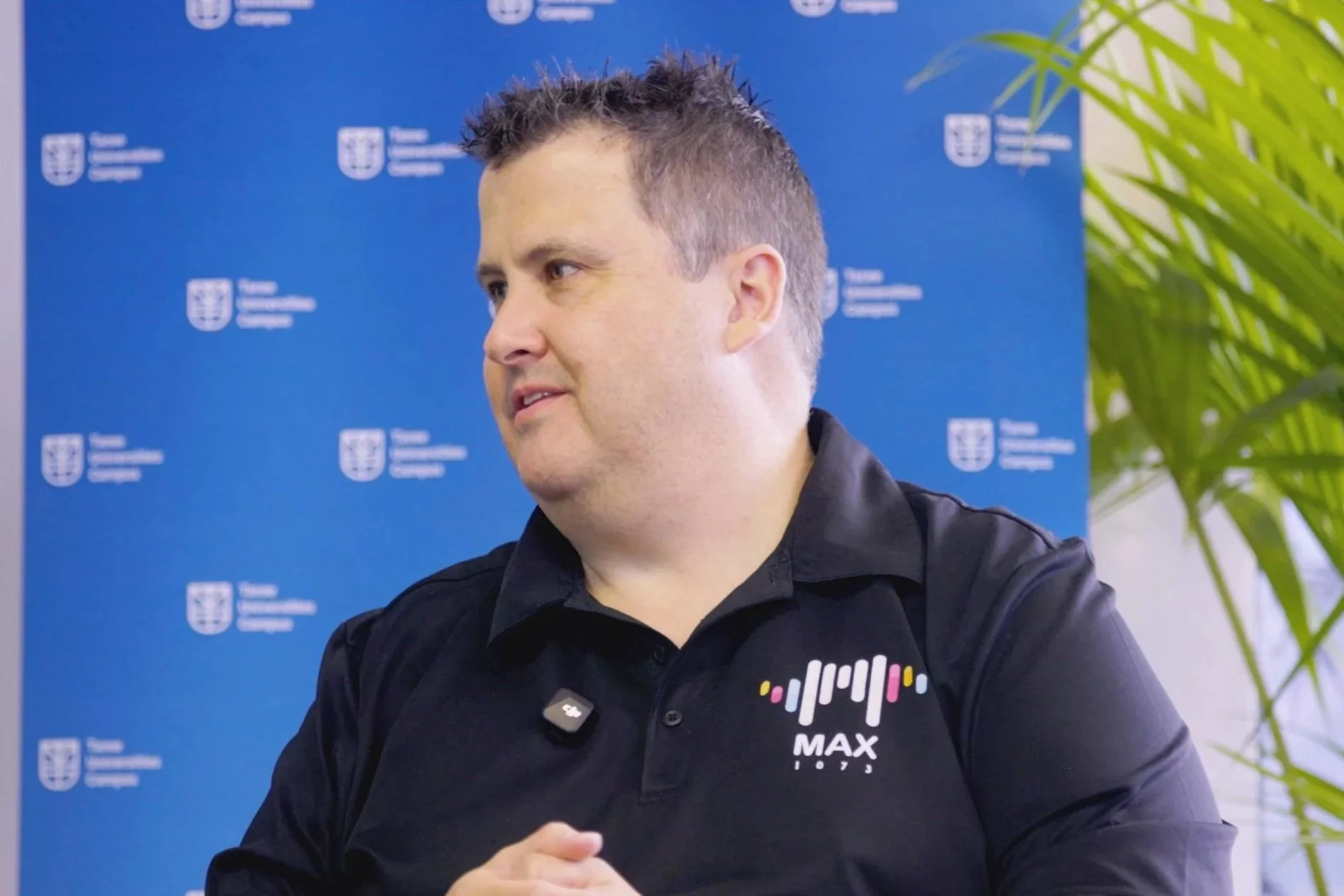
Snapshot:
Industry / Sector: Communications / Media,
Career Type: Employed
Education Pathway: University
Mid Coast Connection: Lives on the Mid Coast
The Blurb:
Dan Anderson, presenter at Max FM, shares his remarkable journey from university graduate to community radio broadcaster. After completing a Bachelor's Social Science in Media Studies, Dan initially worked in radio before branching into TV, corporate communications, and PR. He eventually returned to radio, bringing together a diverse skill set that now includes managing the station's website, social media, and operational troubleshooting.
He discusses the skills that enable his multifaceted role — multitasking, communication, technical proficiency, and thinking on your feet — and explains why he values hard work, creativity, and community connection in all his work. Dan also reflects on the importance of persistence, seeking feedback, and recognising that success comes from putting in the effort and learning from setbacks, even when starting in smaller regional markets.
-
Many of our Human Library participants are happy to continue sharing their insights beyond these videos. Whether it’s a chat over email, a phone call, or even a visit to your school or group, they may be open to offering further advice and perspective.
Every person’s availability is different, so we’ll work with you to find the best way to connect.
Click the link below to get in touch — we’d love to help you
-
Current Role – Presenter at Max FM, waking up the community with early morning broadcasts while managing the station's website, social media channels, and operational troubleshooting.
Career Path – Completed a Bachelor's Social Science in Media Studies, began a career in radio, then transitioned into a non-traditional path working in TV, corporate communications, and PR, before returning to radio with a broader skill set.
Key Skills – Multitasking, technical proficiency with computers, strong communication and grammar, people management, and the ability to think on one's feet to make quick program adjustments.
Challenges Shared – Balancing the demands of an early 4:00 AM start time while maintaining energy and sound quality, overcoming the misconception that radio hosting is simply "playing music," and managing the technical and operational complexities behind the scenes.
What He Loves – The creative freedom to express himself as an introvert without standing on a stage, the privilege of connecting with the community and promoting local events, and the feeling of doing a good job that aligns with his personal values.
Advice to Younger Self – Work hard and be prepared to put in the effort. You might have to start in the bush or a small country market, but persistence is key. Don't take rejection personally; instead, ask for feedback from directors and use it to improve your application and skills.
-
"Most people just see what I do is just sitting behind a microphone, you know, playing Britney Spears or whatever it might be. But really there's so much more that goes into that."
"Being a bit of an introvert, it allows me to express myself creatively without necessarily having to stand up in front of a crowd."
"I might be talking to 90,000 people every day, but the one thing you’re taught when you go to radio school is you're talking to one person, you're communicating one-on-one."
"Radio allows me to be creative at something that I'm good at."
"If you apply for a job and you don't get it, don't take that as a rejection. Take the advice, ask the program director or the content director, can I have some feedback on what what I've submitted to you and take that advice and work with it."
-
[00:00] Intro
Today we're joined by Dan Anderson from Max FM. Dan's going to share with us his journey, his pathways, and the skills he's used to get to where he is today.
[00:26] To start us off, can you tell us a little bit about what your work life looks like for us today?
4:00 AM starts at the moment, but I get to do what I love to do. So I'm in the office early before anyone else, getting to wake up the community as they start to go about their day. And that's a privilege. I think for me, the downside of that is that I have to be awake and sound awake at 6:00 in the morning when everyone else is just getting out of bed. But certainly for me, I get to do what I love and get to communicate some fabulous things that are happening in our community.
[01:12] What was your pathway? How did you find yourself in radio?
It was a bit of a circular pathway really. I started my career straight out of uni in radio and then from there I sort of went to a non-traditional path really. I went into TV and corporate communications and PR and then back into radio. So it's been an interesting journey along the way, but it's given me a great skill set that allows me to put all of that together and bring it to what I do now.
[01:48] And what did you study at university?
I studied Bachelor's Social Science in Media Studies, but along the way I've also studied a Graduate Diploma of Journalism, Master of Arts in Communications and a Diploma of Leadership as well. So bringing all of those together helps what I do in terms of my other roles within the station as well.
[02:12] What are some of the other roles within the station?
So the other things that I do, mainly I look after the website, social media and do a few other things as well. I have been in previous roles sort of more heavily involved in not necessarily technical aspects, but operational aspects, troubleshooting computers and things like that as well.
[02:38] What are some of the skills you need to be in a job like yours?
I guess these days multitasking is key. Having some other skills that you can bring to the job. Most people just see what I do is just sitting behind a microphone, playing Britney Spears or whatever it might be. But really there's so much more that goes into that. You got to be good with computers, you got to be good with people. You got to be able to communicate well, you got to be able to think on your feet. So really having those skills as well, you've got to be able to work out quickly if you need to make changes quickly to the program, you need to work out, “can I do this or can I do that?” So you need to be able to really sort of think on your feet and be able to make quick calculations in your head, I guess. So there's a lot that goes into it and communication skills, good grammar, things like that.
[03:46] What is it that you love about it? What do you love about hosting radio?
I think for me as a kid, I was the kind of kid that grew up playing radio stations, building radio stations out of Lego and things like that. Being a bit of an introvert, it allows me to express myself creatively without necessarily having to stand up in front of a crowd. I really enjoyed that aspect of it. Plus it's just something that I've always loved and always really wanted to connect with and I felt that it was kind of my calling, if you like.
[04:31] It's interesting to hear you describe yourself as an introvert when you're on radio. So it's good for kids to hear that.
People often ask me about that. And I think, you know, there's a lot of introverts that work in radio because we're performing, but we're not on a stage. You know, I might be talking to 90,000 people every day, but the one thing you’re taught when you go to radio school is you're talking to one person, you're communicating one-on-one. So I'm just having a chat with, you know, my best mate or whatever it might be. So that's the key thing I guess for me. And that's how I sort of overcome any of those nerves. I get to go in, I perform, but I don't feel like I'm performing in front of an audience, even though I've got, you know, so many thousands of people listening to me.
[05:28] Your personal values, how are they represented in your work?
I think you've got to work hard in radio. Radio, it's about working hard to get where you want to be. And if you put in the effort, you're driven, you can get to where you want to be. And I think for me, I'm a bit of a perfectionist, probably the wrong word, but I like to do a good job. And radio allows me to be creative at something that I'm good at.
And so I can go home at the end of the day knowing that I've had a good day because I've done the best that I can, I've had a bit of fun on the radio playing music and things like that. So I really enjoy that. And I think that aligns with my values. Community too, because a lot of what I can do is promote community events or talk to members of the community and bring them into the studio to talk about what's happening in our part of the world. And I think for me, that allows me to connect with the community or the community to connect with me.
[06:40] If you could give one piece of advice, what would that be?
I think for anybody trying to get into radio today, it's you've got to work hard. You've got to be prepared to put in the effort and really work your way through. You might have to go and work somewhere in the bush somewhere, in a small country market. But eventually, if you're driven enough and you want to work your way towards Metro radio, then you will hopefully get there. But certainly persistence is the key and really working towards it and taking advice. If you apply for a job and you don't get it, don't take that as a rejection. Take the advice, ask the program director or the content director, “can I have some feedback on what I've submitted to you” and take that advice and work with it.
[07:44] That's great, great advice. Thanks so much. Thanks for joining us today.
Thank you.
Please note: All content is correct at the time of recording.
