
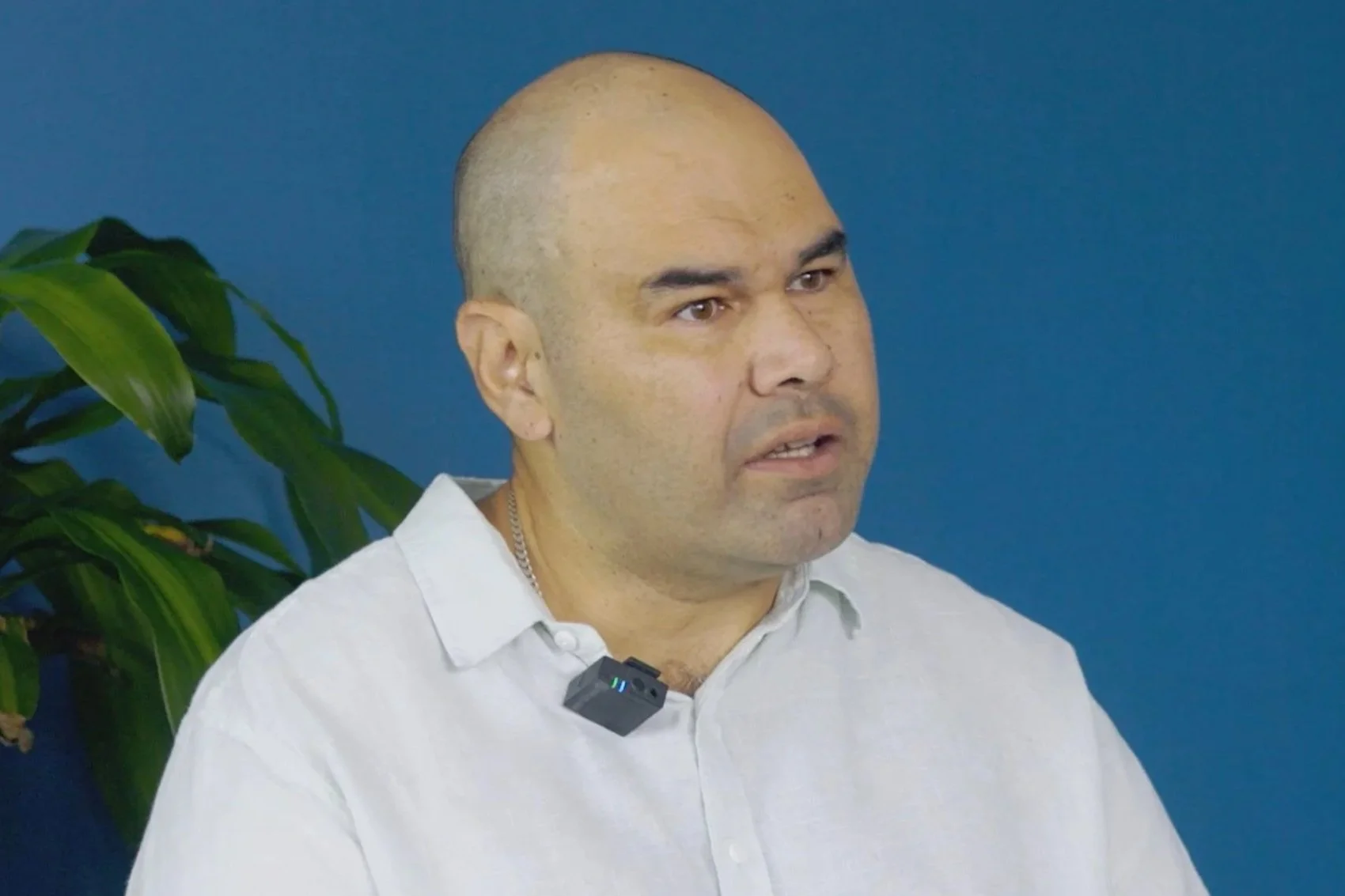
Anthony Paulson
Snapshot:
Industry / Sector: Education & Training, Health
Career Type: Employed
Education Pathway: TAFE & Apprenticeships, University
Mid Coast Connection: Born and raised on the Mid Coast
The Blurb:
Anthony Paulson, General Manager of Joint Colleges Training Services and Chair of Taree Universities Campus shares his remarkable journey from butcher apprentice to cultural training on a national scale. After leaving school in Year 9, Anthony worked as a butcher, served in the NSW Police, and eventually transitioned into health management before taking on his current role delivering cultural education training for GP registrars across Australia.
He discusses the skills that enabled his varied career path — communication, people management, empathy, and leadership — and explains why he values respect, honesty, and humility in all his work. Anthony also reflects on the importance of investing in yourself, developing emotional intelligence, and recognising that more opportunities emerge when you build resilience and listening skills.
-
Many of our Human Library participants are happy to continue sharing their insights beyond these videos. Whether it’s a chat over email, a phone call, or even a visit to your school or group, they may be open to offering further advice and perspective.
Every person’s availability is different, so we’ll work with you to find the best way to connect.
Click the link below to get in touch — we’d love to help you
-
Current Role – General Manager of Joint Colleges Training Services, delivering cultural education training for GP registrars in the Australian General Practice Training Network, working closely with Aboriginal medical services and organisations.
Career Path – Left Chatham High at Year 9/10, completed a butcher apprenticeship at Cundletown Butchery, worked at Wingham Abattoirs, joined NSW Police (trained at Goulburn Academy, stationed at Broken Hill and Darling Downs as a lock‑up keeper), returned to Taree in 2011–12, managed Biripi Aboriginal Corporation Medical Centre for 5 years, then entered GP training/GP Synergy before joining Joint Colleges Training Services.
Key Skills – People management, communication, building quick rapport, empathy, compassion, leadership, self‑related skills, postgraduate qualifications.
Challenges Shared – Navigating multiple career transitions across vastly different industries (butchery, police, health management), managing the complexity of GP training and cultural safety requirements, coordinating a national role with extensive travel.
What He Loves – The network of community and professional members he meets, the locations he gets to visit, the complexity of the GP training industry, his team of staff, the important work around teaching cultural safety to GPs serving regional and remote communities.
Advice to Younger Self – "Set goals. Understand the importance of continuing to invest in yourself... self‑reflection and emotional intelligence... the more you invest in yourself and the better you are and the more resilience you have and the better you can listen and understand situations, the more opportunities present."
-
"I love the network and the people and the locations that I get to go to."
"The top three values that I have is respect, honesty and humility."
"Key piece of advice would be set goals."
"The more you invest in yourself and the better you are and the more resilience you have and the better you can listen and understand situations, the more opportunities present."
-
[00:00] Intro
Today we’re joined by Anthony Paulson from Joint Colleges Training Services. Anthony will share with us some stories from his journey and pathway and the skills he’s used to get to where he is today.
[00:29] Can you tell us a little bit about what your professional day‑to‑day life looks like today?
As the GM I have a lot of meetings, so I have a heavy focus on the strategic elements of Joint Colleges Training Services. Joint Colleges Training Services is responsible for the delivery of all of the cultural education training for GP registrars – general practitioners who are specialising to become GPs. We work heavily with all of the Aboriginal medical services.
We provide all the wrap‑around supports for registrars in training in the Australian General Practice Training Network. We work closely with the RACGP and ACRRM – the Australian College of Rural and Remote Medicine – to provide those supports. So my day is really meetings, meetings and more meetings, and it’s a national role. I travel a lot to all the capital cities and occasionally some of those regional, rural and remote areas, which is a very joyful part of the role.
[01:32] You haven’t always been in this industry. Could you share a little bit about your pathway from Chatham High to where you are now?
I left Chatham High, I think it was at the end of Year 9 or the start of Year 10, because I started an apprenticeship as a butcher in Cundletown, Cundletown Butchery. I did my four years there and went to Bones and Beef at Wingham Abattoirs. I thought that was going to be the ceiling of my career. But one day I was reading the paper and saw an ad to become a member of the NSW Police. I jokingly said to a few boys that I was with, ‘I’m going to ring these guys’. Funnily enough, a couple of weeks later I got a yellow envelope in the mail and it was an application form.
So I filled those out and a couple of weeks later I was accepted into the NSW Police and went down to the Goulburn Academy, done my 8 months there and got stationed out at Broken Hill and I did a year as a lock‑up keeper. And then from then, that was around 2011–12, it was time to return home. So I came back home to Taree and that’s when I entered health. I started in a manager’s role at Biripi Aboriginal Corporation Medical Centre and was there for about 5 years, and that’s when I entered GP training, GP Synergy.
[02:56] So you’ve had quite a varied pathway. Can you talk about a particular skill or something that’s helped you along the way to get through all those changes and pathways?
Obviously people management, people communication, all those sort of self‑related skills are very important. I think I learned a lot from my family and growing up having a supportive background, and then as a butcher, you’ve got to be able to communicate with people and build a quick rapport. I’ve built on that and with the police again, communication.
It’s sort of figured heavily in a lot of the roles that I have taken on in management. When you’re managing people, you’ve got to be empathetic and compassionate and understand those qualities that are in a leader. I think leadership and understanding leadership and a lot of those self skills have been very important for myself. And the training that I’ve done along the way and the post‑grad quals that I’ve got have definitely helped.
[04:08] What is it that you love about your professional life today?
I love the network and the people and the locations that I get to go to. The community members, the professional members that I get to meet and work with on a day‑to‑day basis. It’s such a complex industry, GP training, and I don’t think a lot of people have a lot of appreciation on what it takes to become a GP in community. And so I love that.
I love the work and the amount that you really have to get your head across. I love my team. Joint Colleges Training Services has got 42 staff members. So I’m really close to the majority of them, being either a part of their interviews and recruitment or when they transitioned across into JCTS. Definitely love my team and the work that we do and the important work that we do around teaching GP registrars the importance of cultural safety. And those elements that are just so needed for GP training and delivering services to regional, remote communities.
[05:24] What do all those things that you love about your work – how does that reflect your kind of personal values?How does your work kind of reflect what’s important to you?
The top three values that I have are respect, honesty and humility. I think those three really emulate me as a person and how I communicate and how I work and be with other people and listen. I think those values are really the platform for the ground that you need to have to be successful in any sort of industry or role or situation.
[06:05] What advice would you give to yourself back when you’re in Year 9? Looking back, what would be your key piece of advice?
Key piece of advice would be: set goals. I would try to be better at that because I don’t do that now. So definitely set goals, understand the importance of continuing to invest in yourself. You know, that self‑reflection and emotional intelligence, understanding more about that because it’s really important – because the more you invest in yourself and the better you are and the more resilience you have and the better you can listen and understand situations, the more opportunities present.
Please note: All content is correct at the time of recording.
