Bruce Henry
Snapshot:
Industry / Sector: Academia & Research, Education
Career Type: Academic / Researcher, Retired & Active in Community
Education Pathway: University
Mid Coast Connection: Born & raised on the Mid Coast
The Blurb:
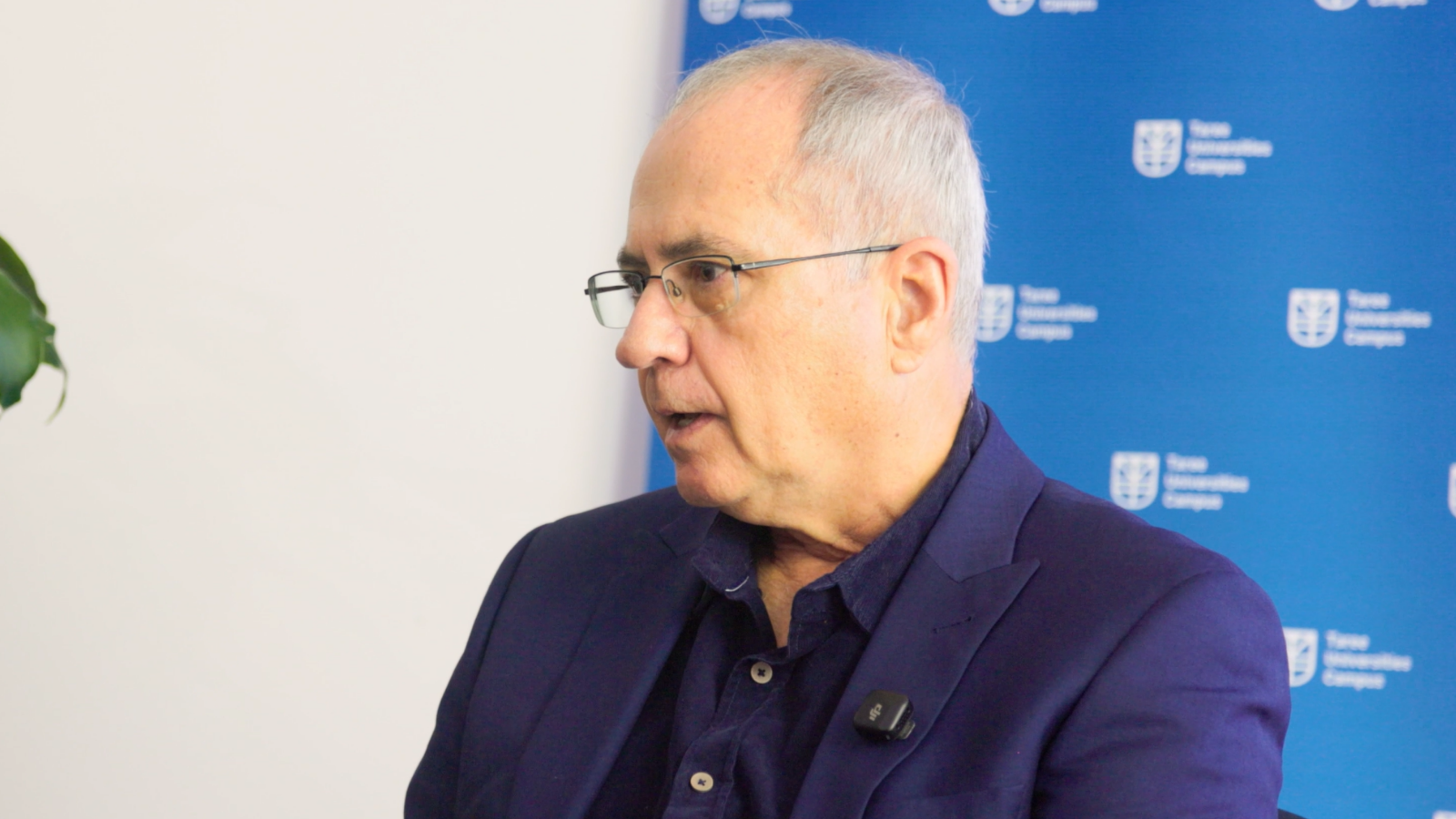
Bruce Henry is an Emeritus Professor of Applied Mathematics at UNSW, where he served as Head of the School of Mathematics and Statistics for the final nine years of his career, overseeing 70 academic staff and 10,000 students.
Growing up on the Mid Coast, Bruce's love of numbers surfaced early — inspired by passionate teachers and with university education made free under the Whitlam government, he studied mathematics and theoretical physics, rising from lecturer to full professor over a decades-long career.
Now retired as an emeritus professor, Bruce champions the skill he values most: logic. His advice is simple — stick with it, back yourself, and trust that determination will carry you through each new level of intensity.
-
Many of our Human Library participants are happy to continue sharing their insights beyond these videos. Whether it’s a chat over email, a phone call, or even a visit to your school or group, they may be open to offering further advice and perspective.
Every person’s availability is different, so we’ll work with you to find the best way to connect.
Click the link below to get in touch — we’d love to help you
-
Current Role: Emeritus Professor of Applied Mathematics at UNSW — retired but retaining his title and university access for life, choosing his own projects.
Career Path: Educated on the Mid Coast during the 1970s era of free university education; studied mathematics and theoretical physics; rose from lecturer to full professor and served as Head of the School of Mathematics and Statistics at UNSW.
Key Skills: Problem solving, critical thinking, and above all logic — sharpened early through high-school debating.
Challenges Shared: His mother's constrained opportunities as a woman on a farm; the escalating intensity of the first yearof university study, honours and PhD study; and the PhD challenge of inventing something entirely new to get past an apparently impassable barrier.
What He Loves: The freedom of emeritus life after the "treadmill" of Head of School, and the deep entwinement of physics and mathematics as a powerful tool for understanding.
Advice to Younger Self: Stick with it — back yourself, because it will at times seem impossibly hard, and determination is what gets you through each new level of intensity.
-
“I did always like mathematics. I don't know why. I think it's strange. I learned to count when I was young.”
“I had a lot of trouble getting to sleep, so I must have been an active little kid. And I remember my grandmother saying to me, "Well, count the sheep." And on the plate there were only a few, and I kept counting and I know I got to a hundred. So I could always do mathematical things. I didn't find them any problem at all.”
“I was very, very lucky. We had fabulous mathematics teachers, right from primary school. I still remember names, and I still remember the way they taught... these teachers that were inspirational, really passionate about the mathematics and really interested in the kids, and testing us out, giving us difficult problems to do and really encouraging us.”
“And the thing in a PhD is you have to invent something new. You have to invent an entirely new thing to get through that barrier. And to do that, you really have to back yourself. You have to stick with it. “
-
[00:00] Intro
Today we're joined by Bruce Henry, who is Emeritus Professor of Applied Mathematics at the University of New South Wales. Bruce will share with us a little bit about his journey and the pathways he's taken to get to where he is today. Hi Bruce, thanks for joining us at the TUC Human Library today.
[00:29] Can you share a little bit of information about your professional life and what that looks like – What did that entail for you?
It's very different today to what it was. I'm now retired, so as an Emeritus Professor, I get to choose what I want to do. I'm still supported by the university, so I can access all of their resources. But when I was working as a full-time job, for the last nine years of my work I was the Head of School in Mathematics and Statistics at UNSW. And that was like being on a treadmill — out of 70 full-time staff and 140 casual staff, 10,000 students, and doing research as well. It was a lot of work. So now my life now is very relaxed.
[01:13] And what is an Emeritus Professor? Can you explain that?
Well, through the different levels of — you start out as a lecturer. I mean, to become an academic, you have to do an undergraduate degree, then you do a postgraduate degree, a doctorate, and then you typically do four to six years of postgraduate research, and then you're finally employed as a lecturer. And then you're promoted to senior lecturer if you do enough research and stuff, and associate professor, and then a full professor. And then if you also contribute to the university through Head of School, this sort of activity, more senior roles, then when you retire you're conferred with this title, Emeritus Professor, which means that you hang on to that title for life.
[02:12] Can you tell us a little bit about growing up? Did you always love maths, and what was your pathway that led you to your studies?
I did always like mathematics. I don't know why. I think it's strange. I learned to count when I was young. I had two older brothers — one was age one and one was age two when I was born — and they taught me how to count. I had two sisters came along later. And I can remember when I was 3 years old and I was given a little cutlery set, a little plate, and it had a picture of a lamb on it jumping over a fence or something. And I had a lot of trouble getting to sleep, so I must have been an active little kid. And I remember my grandmother saying to me, "Well, count the sheep." And on the plate there were only a few, and I kept counting and I know I got to a hundred. So I could always do mathematical things. I didn't find them any problem at all.
[03:17] And did you go to school here on the Mid Coast?
I was very, very lucky. We had fabulous mathematics teachers, right from primary school. I still remember names, and I still remember the way they taught. There were male teachers and female teachers too, and through high school as well. But look, it's worth me saying, like Mrs Godfrey or Mrs Muldoon — these teachers that were inspirational, really passionate about the mathematics and really interested in the kids, and testing us out, giving us difficult problems to do and really encouraging us.
[04:07] Was there a time when you thought, “what on earth, what kind of career could I possibly do with a love for mathematics?” Was there a point where you thought, “what am I going to actually do here with this knowledge and love?”
I never had that question. My mother did. She encouraged us a lot. She went through a period where she couldn't go on with any studies because she was a female. She lived on a farm and she wasn't supported to go to town and do any more. So she was always wanting to encourage us to go as far as we could with our studies, with education. And she knew I had a great interest in mathematics. So she was thinking, well, what are you going to do? Are you going to be a bank manager? What are these things you're going to do? And I said, well, I wouldn't mind just going to university and doing a mathematics degree. And I remember her saying, well, you can't do that — I mean, what do you do then? What's your job? And it was a fair call.
So I decided I'd do theoretical physics, and she knew nothing about that. But I liked that because I knew that physics and mathematics were entwined, and that to get a deep understanding of things, knowing them both well together was a powerful tool. And so I didn't really think of a career. I was lucky. I was born — I had my education through the 70s, when Gough Whitlam had made education at university free. Right, so there were no barriers that way. I was supported with scholarships because I came from a family that was a poor family, and so I had government scholarships that supported me. And I didn't really think about career — I just did what I found I was good at.
I think that if I would say to people, I would say that's something that you can operate by: if you find you're good at something, push yourself at it and relax about it. Just go with it.
[06:25] And can you talk about some skills that you've used across your life? Any particular skills that you really needed to utilise, and maybe give an example across your professional life?
An anecdote could be tricky to call at a moment, but I know it's generally said that in mathematics, physics, you learn how to do problem solving, you learn critical skills, you learn logic. And I guess the thing that has helped me most is probably logic.
It's interesting — when I was at high school, I was part of the debating team. And in the debating team I had my best friend at the time, and my older brother Ken. He was only in the next year above me. And we were, well, to be frank, we were a good debating team. And we thought, we'll go to university, we'll do law together and set up a law firm.
I didn't feel strongly to go for law — I love the logic, but it drew me more to the mathematics. One of the members of the debating team, Matthew, became a barrister in the Land and Environment Court. And Ken went on, as you know, and had his career, but we went our separate ways. I've diverged from your question.
[07:45] Bruce, if you had to give a piece of advice to someone who's starting out, or someone who's thinking of a career change, or even think back to when you were younger — what would be your piece of advice you would offer?
Stick with it. It's not always going to be easy. At times it's going to seem impossibly hard. It's a bit like — if I give advice to students doing a PhD, for example, they're doing a doctorate — the point about a PhD is effectively you've got to find your way through an obstacle.
Maybe you've got to get over a fence, but it's too high to jump, it's too thick to get through, you can't possibly do it. So what are you going to do? And the thing in a PhD is you have to invent something new. You have to invent an entirely new thing to get through that barrier. And to do that, you really have to back yourself. You have to stick with it.
But it's not just a PhD. That applies if you go into university. The first year at university is like a kick in the guts — it's a different level of intensity to what you've experienced at school. If you go on and do honours, it's like another whack, it's another level of intensity again, and a PhD is like another level again. But you just go with it, stick with it. It takes incredible determination.
Please note: All content is correct at the time of recording.
