Jarrad Duffy
Snapshot:
Industry / Sector: Health (Allied, Mental, etc.)
Career Type: Currently Studying, Employed
Education Pathway: University (Current)
Mid Coast Connection: Born & raised on the Mid Coast
The Blurb:
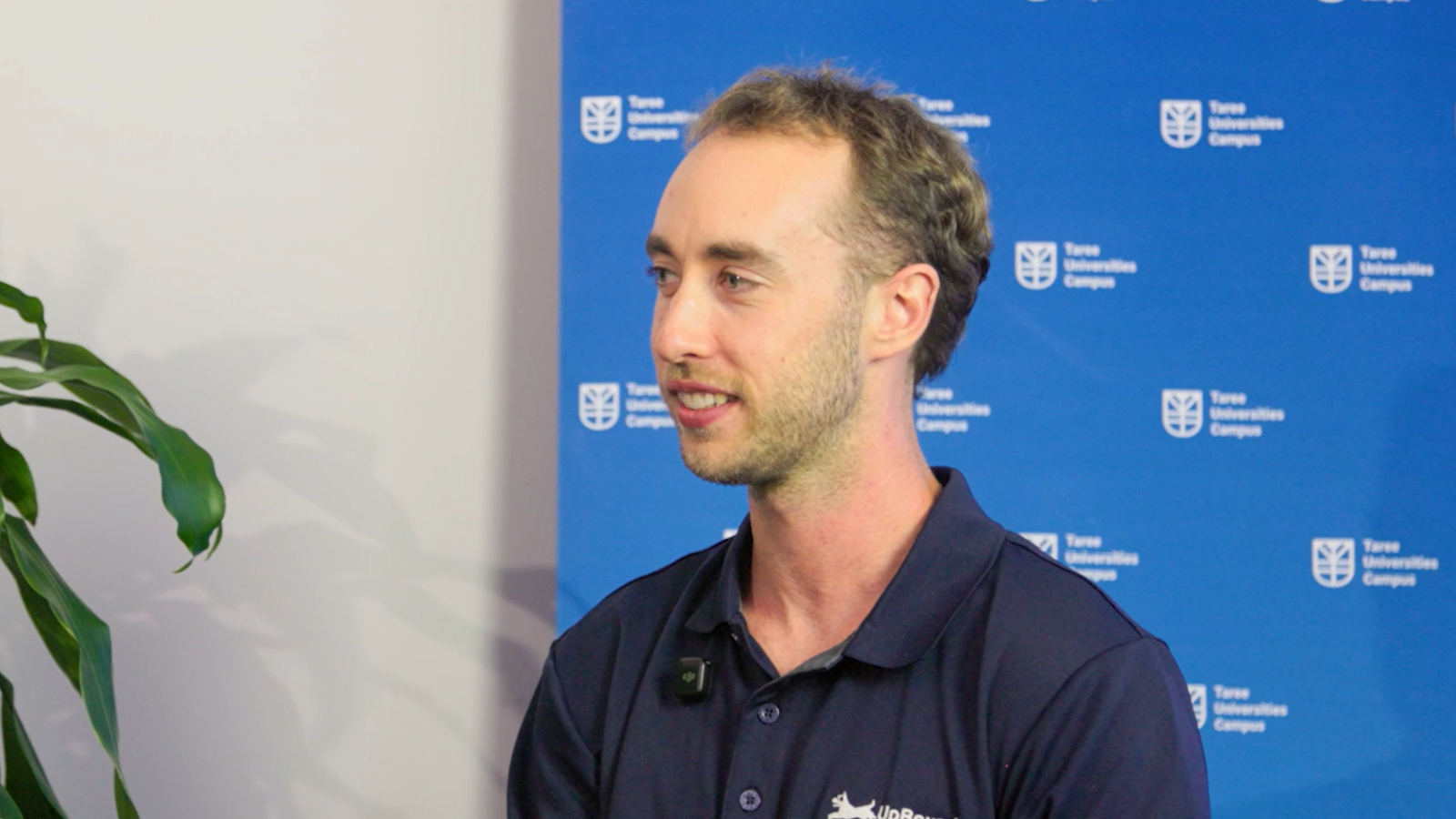
Jarrad Duffy is a third-year Bachelor of Exercise Sports Science student on track to become an exercise physiologist, balancing study with part-time work at Taree marketing and IT company UpBound.
After a decade out of high school, including a career in motorsport media and motorcycle events, a growing interest in gym and training pointed him towards a new chapter. Returning to study after ten years was daunting, but online learning, life experience and a problem-solver's mindset — plus learning how to learn again — carried him through.
Jarrad sees exercise physiology as a way to make a real community impact. His advice: don't let the fear of failure stop you from starting — every failure is a learning, and you'll never know where it'll take you.
-
Many of our Human Library participants are happy to continue sharing their insights beyond these videos. Whether it’s a chat over email, a phone call, or even a visit to your school or group, they may be open to offering further advice and perspective.
Every person’s availability is different, so we’ll work with you to find the best way to connect.
Click the link below to get in touch — we’d love to help you
-
Current Role: Part-time third-year Exercise Sports Science student working towards exercise physiology, while working part-time at UpBound in Taree, doing small business marketing, photography, IT, AI and websites.
Career Path: Ten years out of high school in motorsport media and events → discovered a passion for gym and training → returned to study as a mature-age student, now in third year → aiming for a career in exercise physiology.
Key Skills: Problem solving, adaptability, diligence, and the soft skills gained from workforce experience — which he sees as an advantage over students who went straight through.
Challenges Shared: Returning to study after 10 years — learning how to learn again, and balancing part-time study with part-time work.
What He Loves: The balance of hitting both sides of his brain — creative work at Upbound and knowledge-heavy study at uni — and riding his passion to see where it takes him.
Advice to Younger Self: Don't let the idea of failure put you off from starting — it's never as scary as you think, and every failure is a chance to grow.
-
"But it's definitely a big adjustment, trying to work things in and just learn how to learn again, because it's been a long time."
"Proper learning — what you have to learn, not just what you want to learn — took a lot of diligence and practice."
"I really think when there's a passion there, ride it and see how far it'll take you."
"Don't let the idea of failure put you off from starting."
"It's never going to be as bad as you think it is. It's never as scary as you think it's going to be. Just get going, and you'll never know where it'll take you."
-
[00:00] Intro
Hi, today I'm joined by Jarrad Duffy, who is a student studying his Bachelor of Exercise and Sports Science, as well as juggling a part-time job. Jarrad will talk to us about his pathway and the skills he's used to get to where he is today. Hi Jarrad, thanks for joining us today for our TUC Human Library.
[00:28] Would you like to share with us a little bit about your professional or student life at the moment?
I'm a part-time student, part-time working. Studying exercise and sports science to go into exercise physiology, as well as working in town in Taree for a company called UpBound. We do small business marketing, photos, IT, AI, websites — that kind of stuff.
[00:54] What led you to choose exercise sports science? What was your pathway from school, your interests? How did you land there?
It wasn't a very convenient route to studying. Coming in as a mature-age student, I kind of had a previous career in sport, in hindsight, but it was more like a media publishing kind of route, through motorcycle magazines and motorcycle events and that kind of stuff. I got more into gym and exercise training through that, which spurred me down this path of, “OK, maybe this is more what I want to do with the next iteration, next chapter of my life.”
Like a lot of young people, I like being fit and active. So when I started looking, I was like, “exercise physiology kind of ticks a lot of boxes”. Especially being around here in our area with its more ageing population, I think it's like somewhere we can really make a big impact on the community.
[01:57] How do you find that juggle between part-time study and work? What are some strategies — how do you manage that?
It was a massive adjustment. I was just bang on 10 years out of high school, so the idea to go back to uni and to do further study was pretty daunting and pretty scary. But the way study is nowadays, where most of it's online, I could work around my study and fit the study in and around it, and that made it a hell of a lot easier.
I'm in my third year now and it's starting to click. But it's definitely a big adjustment, trying to work things in and just learn how to learn again, because it's been a long time, and you pick up little traits and learn through external resources, through YouTube and stuff like that. But to be like, yeah, proper learning — what you have to learn, not just what you want to learn — took a lot of diligence and practice.
[02:59] What kind of skills do you feel like you utilise to be able to make that work for you and to be successful in both a job and your study?
I've always enjoyed being a problem solver. Whether that was in events in the past, or even the IT-techie side stuff with cameras and all that kind of stuff — there's always something cropping up that is unexpected, and just working with what you've got to try to figure it out, and knowing that close enough's good enough is a good way to look at it.
I think the soft skills of being in the workforce, not coming straight from school and going back to uni — that's something that I really, really appreciate now. I don't know if I could have done this straight out of school. Having that more life experience and the soft skills now gives you that little step up compared to the younger students that have gone straight through.
[04:08] That's a really good insight. And what do you love about it? Your job is quite different to what you're studying. So what do you love about the combination that you've created for yourself at the moment?
It's cool because it hits both sides of my brain. I've got the creative side through work, and then the uni is obviously very heavy knowledge-based stuff, but I really like the balance of it. I really think when there's a passion there, ride it and see how far it'll take you.
[04:42] If you throw forward a few years with your exercise sports science, moving into exercise physiology – what kind of career would you like to have? Where would you like to see yourself when you finish university?
It's a weird space to be in, because exercise physiology isn't a common career path. I think it's emerging and it's a growing industry, but it's an industry that's only been around for 15 years or so. Everyone knows what a physio is, but it's more long-term rehab and it's more helping people with chronic disease prevention and improving their quality of life — not like a physio where it's a lot more short-term, acute stuff. So when you do start looking as a younger person, you don't really look around and see exercise physiologists, because you're not really the target market. But anyone that's kind of 50 plus, there's a fair bit of exercise physiologists getting around.
[05:45] What would be one piece of advice you would offer to someone who's starting out or changing careers or maybe looking to follow a similar path?
For me, it was like, don't let the idea of failure put you off from starting. You're going to fail, but every little failure is a little learning, and from there you're just going to grow and get stronger and stronger and stronger. Without starting, you never know where you're going to get to. It's never going to be as bad as you think it is. It's never as scary as you think it's going to be. Just get going, and you'll never know where it'll take you.
Please note: All content is correct at the time of recording.
