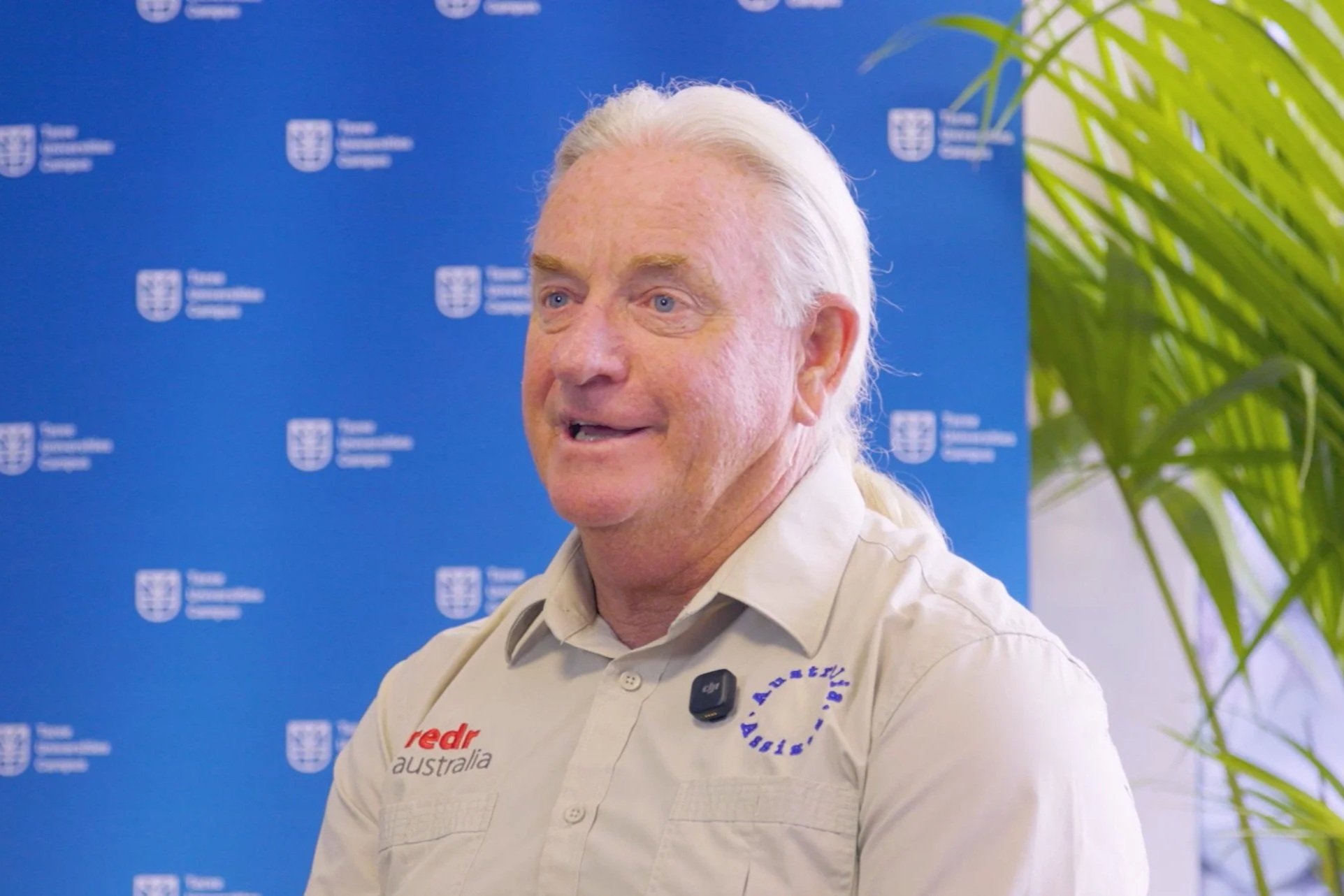
Greg Blaze
Snapshot:
Industry / Sector: Engineering & Infrastructure
Career Type: Consultant / Contractor, Volunteer
Education Pathway: University
Mid Coast Connection: Served as Director of Engineering for Taree Council from 1995 to 2009
The Blurb:
Greg Blaze, a seasoned civil engineer with a career spanning local infrastructure and international humanitarian aid, shares his journey from a student unsure of his path to a global project manager. After initially studying electrical engineering and working at BHP in Newcastle, Greg switched to civil engineering, finding his stride in local government where he oversaw major projects like the Taree bypass. A three-month stint in war-torn Somalia for the World Food Programme sparked a passion for humanitarian engineering, leading him to spend five years overseas and subsequently dedicate his later career to building schools, hospitals, and fire stations in places like Samoa.
He discusses the evolution of his skills from technical design to project management and mentorship, emphasizing the importance of contributing to communities both near and far. Greg also reflects on the satisfaction of leaving a tangible mark on the world and advises young people to "just do it"—to try their hand at various subjects and continue learning, as every qualification adds value to their future.
-
Many of our Human Library participants are happy to continue sharing their insights beyond these videos. Whether it’s a chat over email, a phone call, or even a visit to your school or group, they may be open to offering further advice and perspective.
Every person’s availability is different, so we’ll work with you to find the best way to connect.
Click the link below to get in touch — we’d love to help you
-
Current Role – Civil Engineer and Project Manager, working on a consultancy basis for local councils (roads, bridges) and humanitarian organizations (schools, hospitals, fire stations) in regions like Samoa and formerly Somalia.
Career Path – Studied maths and science; initially trained in electrical engineering; worked at BHP in Newcastle for three years; switched to civil engineering; worked in consulting; spent 14 years (1995–2009) as Director of Engineering for Taree Council; took a three-month leave to Somalia which turned into a five-year humanitarian mission; returned to consultancy and humanitarian work.
Key Skills – Technical design (stormwater, drainage, roads), project management, managing people and money, contract negotiation, mentoring younger engineers, and teaching local communities to manage their own projects.
Challenges Shared – Navigating a career change from electrical to civil engineering, transitioning from stable local government to the unpredictable nature of humanitarian work in conflict zones, and balancing the technical demands of engineering with the soft skills of management and mentorship.
What He Loves – Seeing the physical results of his work (roads, stadiums, Main Streets), the pride of contributing to a community's infrastructure, and the deep satisfaction of helping communities in genuine need overseas.
Advice to Younger Self – "Just do it." Have a go at the subjects you are doing, even if you aren't sure of the destination. Keep studying and thinking about your future, as every qualification you gain will help you later in life.
-
"If I was doing it here in the local community, it's more likely roads and bridges... If it's in the humanitarian sector... it's building warehouses, schools, hospitals, more recently fire stations in Samoa."
"I wandered over there [Somalia] for three months and loved it... ended up staying for five years."
"The further you get into it, it's more management skills... managing people and money pretty much through construction, contracts."
"Every time I drive past something I mention, 'Oh, I built that.'... You feel like a part of you is in there."
"It's about contribution, contributing to either your community or somebody else's community."
"Keep studying, keep thinking about what your future will be. Whatever you do in terms of study will help you into the future."
-
[00:00] Intro
Today we are joined by Greg Blaze. Greg is a civil engineer who has worked locally here for our council as well as humanitarian work overseas. Greg will share with us his journey and the pathways and skills he has used to get where he is today.
[00:30] I was wondering if you could tell us a little bit about your work life. What does that look like?
Yes, I'm a civil engineer. I'm sort of approaching the end of my work life, so it's not as permanent. I don't have a permanent job. I can actually pick and choose a bit of what I like to do. And if there are interesting things to do overseas, then I'll wander over and do them. So civil engineering, I'm mostly involved in project management now, which is looking after infrastructure construction. If I was doing it here in the local community, it's more likely roads and bridges, which I have done with the council here over quite a few years. If it's in the humanitarian sector, which I do a fair bit of, it's building warehouses, schools, hospitals, more recently fire stations in Samoa. So it's quite broad.
[01:24] Can you explain a little bit about, what that humanitarian work is like? What does that mean? What does that look like?
I was actually the Director of Engineering here at Taree. I was here in Taree from 1995, I think, to about 2009. I took three months off to do long service leave. And as part of that, I went to Somalia. There was a war going on there at the time, building warehouses for the World Food Programme. So I wandered over there for three months and loved it. It's great. Good adventure. You know, I had the skills that I'd developed in local government to go and do those things. So I wandered over there, did three months and ended up staying for five years. Having the skill set for civil engineers, you can take it to a number of different locations.
[02:19] And what was your pathway to becoming an engineer?
Well, I was good at maths and science as a kid. My brother was an electrician actually, and I had no idea what I wanted to do. So I thought I'll do engineering, I'll do electrical engineering, and got a job at BHP, the steel maker in Newcastle. I did that for about three years and didn't like it. So I swapped over to Civil and then wandered through a few different areas. I did some consulting work for a while, ended up in local government, which was quite good work-life balance was very good in local government. And then moved over to humanitarian engineering probably 15 years ago. Been doing that, doing some of my own consultancy work. So quite variable, I'd suggest.
[03:16] What are some of your personal skills that have contributed to your work as an engineer?
I think in the early stages of an engineer's life, your technical skills probably have to be pretty good. So you're doing design, looking at technical elements, stormwater, roads, drainage, a number of different areas. But the further you get into it, it's more management skills. So you're managing people and money pretty much through construction, contracts, those sorts of things.
I think in probably the last 10 years, it's been more managing those things, but also mentoring younger engineers, teaching them how to manage their own projects. And certainly in the humanitarian area, you're wandering into areas where they don't have the skill set, otherwise they wouldn't be asking for it. So when you go to those places, you are pretty much the only person. So you're teaching the local people how to manage their own projects, which is really rewarding, very satisfying.
[04:30] What is it that you love? What do you love about engineering?
My wife and kids would sort of laugh a bit because every time I drive past something I mention, "Oh, I built that." Some of the things in Newcastle, like the big stadium, I built that. And of course, I had a very small fraction of building it. Or the Main Street here in Taree, I built that back in 2000 when the bypass was put in. But again, you have small bits and pieces, but you feel like a part of you is in there. And it's always good to be doing things in your community or somebody else's community because you're contributing to their lives and to your own family and friends' lives as well.
[05:17] What are your personal values, particularly around that humanitarian work? What kind of led you into that?
I think it's about contribution, contributing to either your community or somebody else's community. That's always been a part of why I do engineering, is to actually have that contribution. But when you do it in another location where there's a genuine need, there's a lot of satisfaction in that. So you're doing a job where you get well paid, but you're still out there doing things that people need, and it is very satisfying.
[06:02] Greg, if you could give one piece of advice to your younger self, what would you tell yourself back when you're at high school?
If I was in high school, I'd say just do it. As I said, I didn't really understand what and where I wanted to go. But if you have a go at the subjects that you're doing, whatever they are, that'll work out well for you. One piece of advice I would have, I guess, for people who are at university or completed university is keep studying, keep thinking about what your future will be. Whatever you do in terms of study will help you into the future. And I've had that a couple of times where I've applied to jobs and because I have other qualifications, it's been helpful. So now I'd say just do it.
Please note: All content is correct at the time of recording.
